

Software / QBK XML Differ / Compare XML and review changes in PDF
XML for analysis. PDF for people.
The QBK XML Differ separates the technical detection of changes from their subsequent presentation. Comparison takes place at XML level. A readable comparison PDF can then be generated for review and approval.
Why not simply compare two PDFs?
Many change processes fail not because documents cannot be compared, but because comparison starts too late!
Traditional PDF or Word comparisons analyse target formats already generated by a publishing process. However, these contain layout information, automatically generated structures, line and page breaks, IDs and other technical details unrelated to the actual content change.
Such comparisons therefore often result in incorrect change markings, extensive manual checking and unreliable review processes.
QBK Differ takes a different approach: comparison takes place directly at XML level.
The engine analyses two XML versions, detects structural and content differences and generates an annotated XML result. This result can then be converted into a readable comparison PDF. The resulting document makes changes clearly visible and can be distributed, reviewed, annotated and archived in the familiar PDF format.
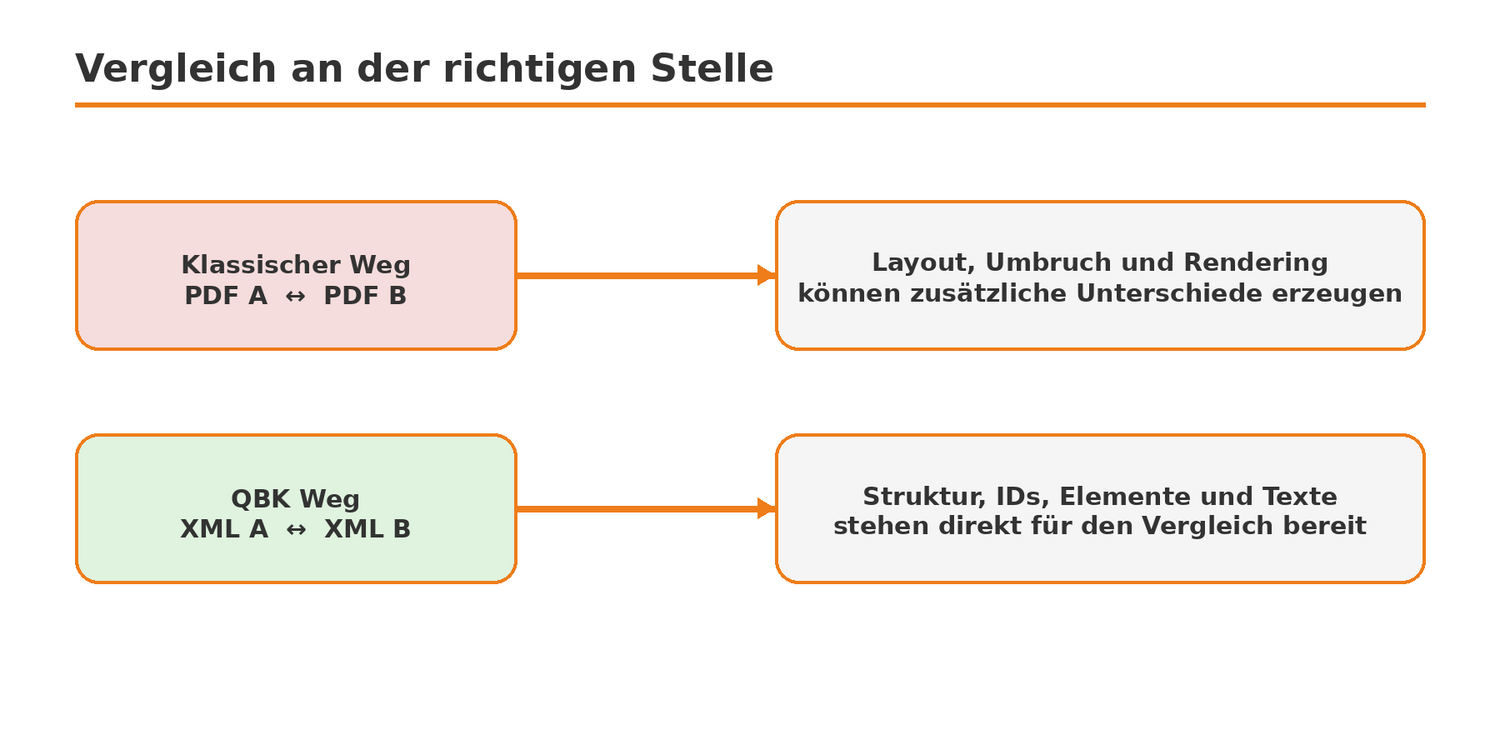
Figure: Differences between PDF and XML comparison
XML comparison features:
Insertions and deletions:
Newly added and removed content can be shown together in a unified change display.Changes within a sentence:
With inline matching, comparison can be more precise than simply marking an entire paragraph. For example, if only “14 days” changes to “30 days”, exactly that difference can be displayed.Moved content:
If the matching logic recognises that content reappears elsewhere, this relationship can be used to present changes more clearly.
Result: a PDF containing both versions
The main benefit of QBK XML Differ lies in its PDF output: two XML versions produce a combined comparison PDF.
In this PDF, the two document versions are combined in a unified change display rather than placed side by side as separate files. Readers can see directly in the document what has changed.
This makes the following visible, among other things:
new content,
removed content,
inline changes at word and character level,
attribute changes (if required),
structural adjustments,
moved sections.
This makes the Differ particularly suitable for review, approval, quality assurance and documenting changes.
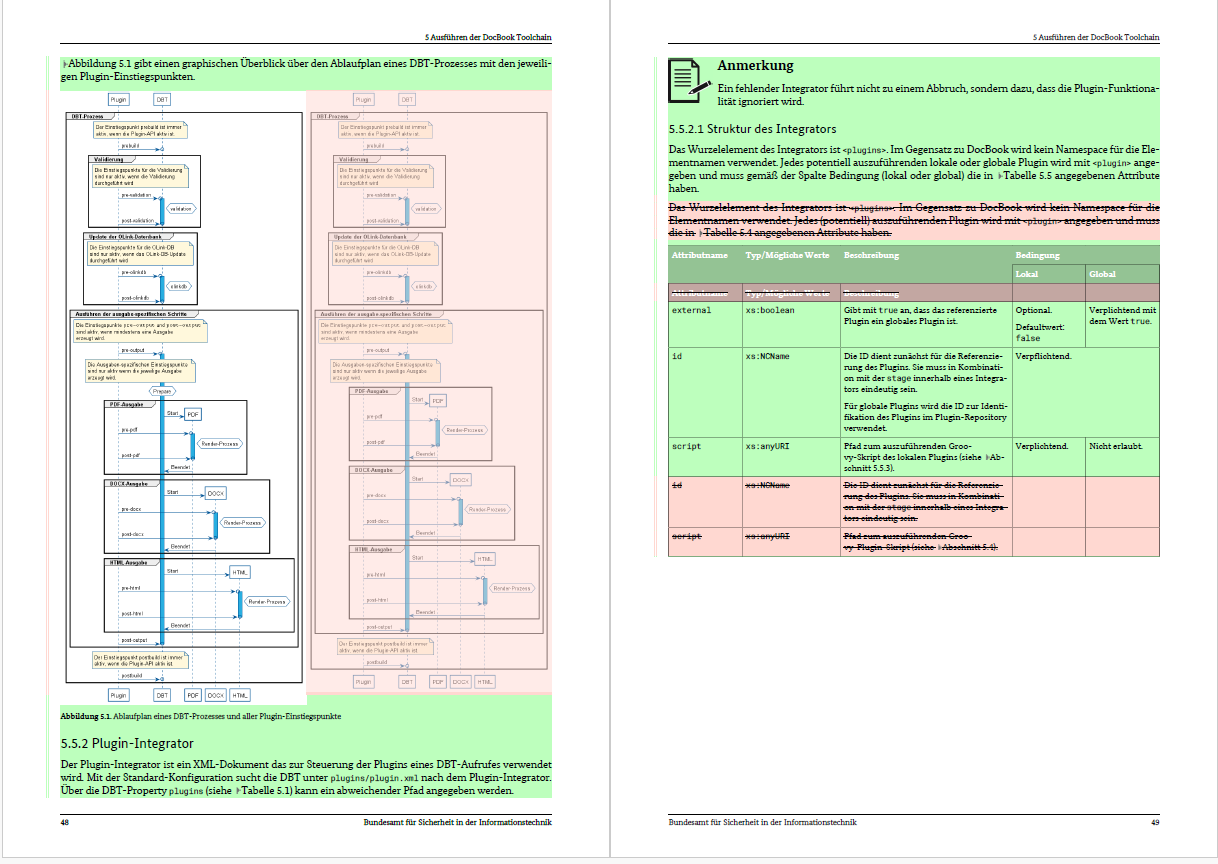
Figure: Example comparison PDF output with highlighted changes.
The comparison PDF can be read, annotated, distributed, approved and archived using existing tools.
Benefits: more precise than traditional PDF comparison
A conventional PDF comparison mainly detects visual differences. The QBK XML Differ detects the change where it originates: in the XML structure.
This provides decisive advantages:
Fewer incorrect change markings
Technical differences in the generated PDF or Word document are not incorrectly treated as content changes.Better traceability
Changes can be detected in the structured XML and then presented clearly in the PDF.Detection of moved content
Content can be recognised as moved, rather than merely appearing as deleted and reinserted.Use of XML information
IDs, structures, hierarchies and domain-specific relationships from the XML can be taken into account in the comparison.Simple review process
The result is a PDF that can be read, distributed and reviewed without specialised tools.
Use QBK XML Differ for your documents!
Request an example comparison output or send us two typical XML versions.