

XML technologies / XML Schema / About the book
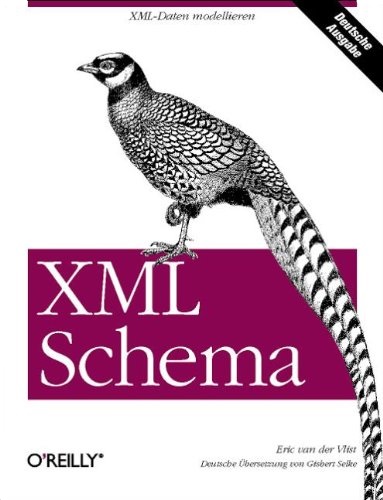
Book cover XML Schema | Author: Eric van der Vlist German translation by Gisbert W. Selke First edition, February 2003 ISBN 978-3-89721-345-6 432 pages Program examples available for download (in English) eBook format: PDF Printed edition no longer available! |
Contents
The W3C recommendation “XML Schema” defines rules for formally describing XML document structure and content, enabling documentation and validation. Its largely object-oriented approach appears in strong data typing, which makes binding content to objects and programs easier than with DTDs. XML Schema is therefore used for data exchange and process automation, and is a key component of web-service specifications such as SOAP and WSDL. These many possibilities have a price: XML Schema is considered exceptionally hard to learn because of its complexity.
The book XML Schema guides readers through the W3C recommendation, helps select a suitable modeling design and provides practical tips while also explaining limitations and pitfalls. Recurring examples illustrate the explanations, including how schema types relate to existing data types from programming and databases, and how XML Schema relates to other modeling tools, DTDs, RELAX NG and Schematron. Reference chapters on XML Schema elements and data types complete the book.
Topics include:
XML Schema syntax basics
Design options: flat schemas, Russian dolls and other models
Simple and complex data types in different contexts
Built-in data types
Facets
Keys, references and identity constraints
Designing extensible schemas
(Source: O’Reilly Verlag)
Copyright © 2003 O'Reilly Verlag GmbH & Co. KG
You may print the online version for your private use.
Otherwise, this chapter from “XML Schema” is subject to the same conditions as the bound edition. The work, including all its parts, is protected by copyright. All rights reserved, including reproduction, translation, microfilming, and storage and processing in electronic systems.
O’Reilly Verlag GmbH & Co. KG, Balthasarstraße 81, 50670 Köln, kommentar(at)oreilly.de